The 10 best comics read last year! Who came in first?
A VERSÃO EM PORTUGUÊS ESTÁ ABAIXO/THE PORTUGUESE VERSION IS BELOW
As a comic book fan and professional, reading comics is still a pleasure. Reading the good ones, at least, which seems increasingly rare. There are plenty of average-quality comics out there, but the memorable ones that you feel like keeping to reread someday seem rarer and rarer. Below is the list of the 10 best comics I read in 2024. As is traditional in my annual lists, you’ll find comics released in Brazil, the U.S., and Europe last year, as well as some that are still unpublished in some of those places, and others that were released a long time ago. Since the purpose of these lists is, at their core, to recommend readings, I don’t stick to publication dates but rather focus on what I enjoyed most out of over 100 albums.
So, here is the countdown:
10th
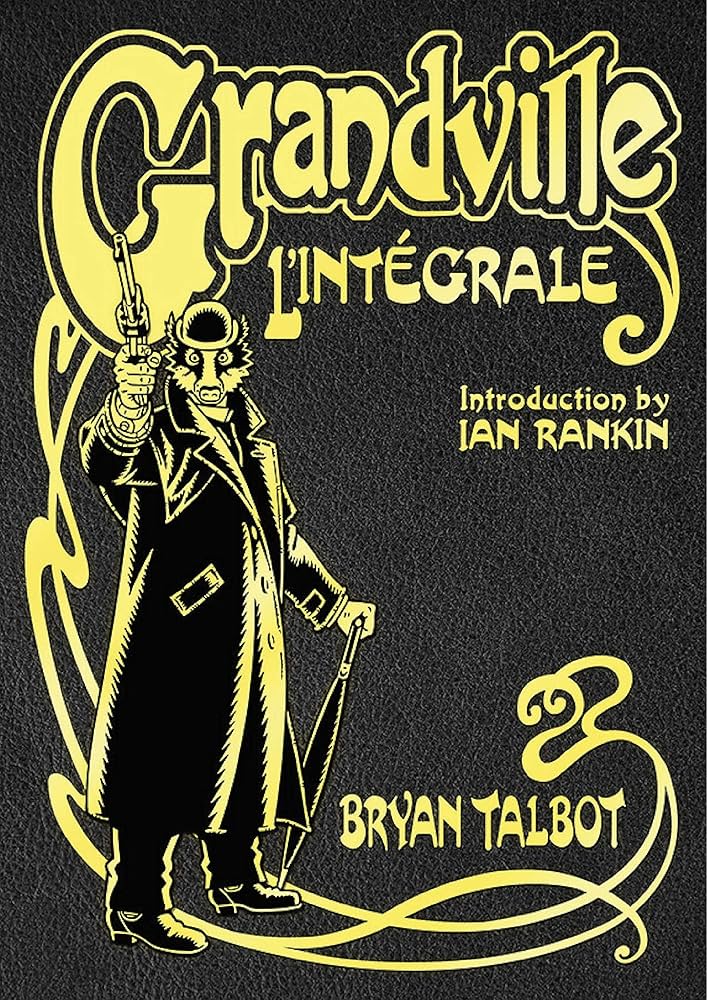
Grandville L’integrale, by Bryan Talbot (Jonathan Cape)
Talbot’s successful series in a luxury collection, packed with extras. Set in the early 20th century, follows the anthropomorphic detective Inspector LeBrock while he investigates mysteries and crimes in a parallel reality where England has become a socialist republic after gaining its freedom from the invading forces of France. Action, violence, solid scripts, and engaging characters in a series with incredible art that keeps readers constantly on edge. Its only flaw is Talbot’s attempt to throw in some jabs at capitalism in the plots and criticize politicians he dislikes in the extras, showing that he fully swallows the narratives created by mainstream global media. It doesn’t detract from the reading pleasure, but the English writer and artist should do better research before expressing some of what he believes due to sheer lack of information—also, his “socialist republic” seems only socialist in name, as it has all the characteristics of a capitalist society.

9th
Batman with Robin the Boy Wonder: From the 30’s Through the 70’s, by Bob Kane, Bill Finger, Neal Adams (Crown Pub)
This 1977 English edition in black and white brings some of the best Batman stories released between the 1930s and 1970s by creators who shaped the character’s trajectory. Some of these stories are already well-known to fans, but there are some lesser-seen gems, especially at the beginning of the volume, with likely unpublished stories in Brazil where early-career Batman uses genuinely violent methods against criminals. For example, he doesn’t hesitate to use a pistol to shoot at henchmen, crime bosses, and mad scientists. Fun and over the top, this is how more superhero comics should be. (Thanks to Wilson Simonetto.)

8th
Tex Edição de Ouro 72, by Mauro Boselli e Carlo Rafaelle Marcello (Mythos Editora)
Tex is almost every time a fun comic, full of action, shootouts, and humor—only when the writers make the hero and his companions too infallible do the stories lose quality, but fortunately, that’s rare. This issue feels almost like a superhero adventure, with the Texas Rangers facing a group of seven psychopaths, each with a special trait—a blind man with infallible aim, another of extreme strength, another who uses knives, and so on. The confrontation is very well-executed, with several moments of suspense and action. Simultaneously a modern and old-fashioned Western.

7th
Miracleman: The Silver Age, by Neil Gaiman e Mark Buckingham (Marvel Comics)
We had to wait 30 years for Gaiman and Buckingham to complete the “Silver Age” storyline of Miracleman after inheriting the series from Alan Moore. Gaiman’s style is different than Moore’s, so action and violence give way to character development and exploration of the curious world where Miracleman is seen as king and god. The main focus here is the resurrection of Young Miracleman, the young sidekick of Mike Moran who died in the 1950s, and his struggles to adjust to a future world he barely understands. In the end, it’s a character study and a plot full of interesting details, like many of the best comics from the 1980s and 1990s—the kind of comic that publishers seem to have largely lost the formula for creating. It’s a shame we probably won’t see the end of this saga after Gaiman’s recent “cancellation”, unless they hand the scripts to another professional. Todd McFarlane, maybe?
6th
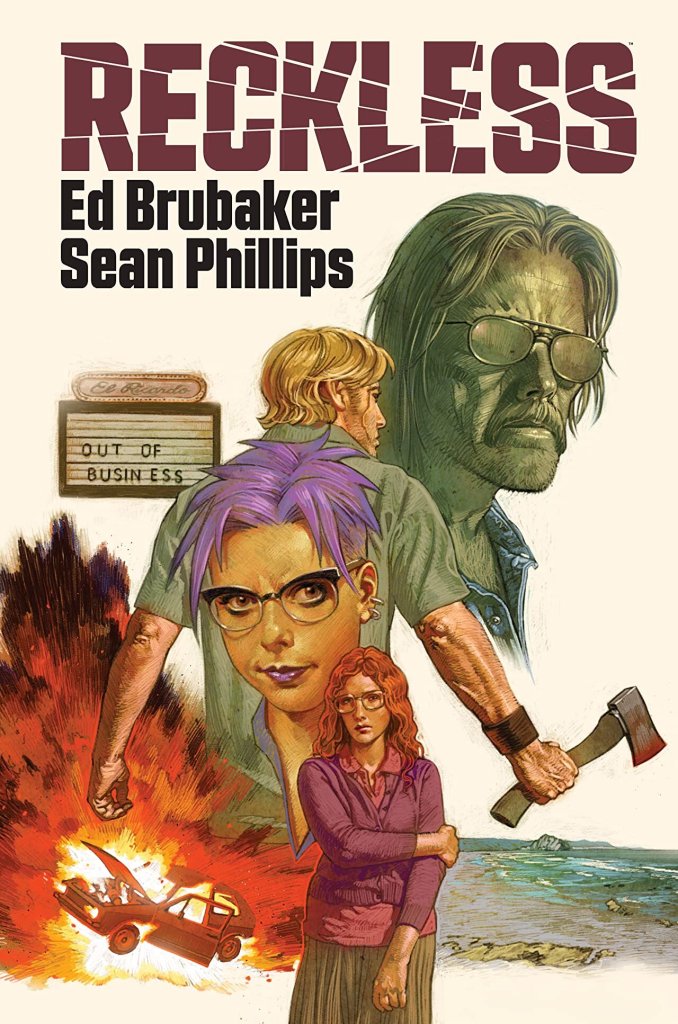
Reckless, by Ed Brubaker e Sean Phillips (Image Comics)
With Reckless, Brubaker and Phillips started an experiment at Image Comics that worked very well: releasing stories about a fixed character, the titular detective, in quarterly graphic novels of about 144 pages with stories complete in themselves. In this initial volume, Ethan Reckless gets into trouble trying to help someone from his past, in a plot that becomes increasingly dangerous and violent. The authors draw inspiration from noir novels, pulps, and the more serious, complex cinema of the 1970s. A great pick for fans of action and mystery, and fortunately, several other volumes have already been released that can be read independently.

5th
The Amazing Spider-Man by Nick Spencer Omnibus, by Nick Spencer, Ryan Otley e Humberto Ramos (Marvel Comics)
Can you remember when Spider-Man was fun and funny? When the plots and situations Peter Parker faced were dramatic but still left room for humour? That’s what writer Nick Spencer brings back in his run that began in 2018 and resulted in this massive volume of over 1,300 pages. The focus is on the arrival of a new villain who causes huge problems for Peter and everyone around him, but the plots never fail to surprise readers with memorable appearances by Kraven and other classic enemies. Highlights include the villain Boomerang, who becomes Peter’s roommate and gets him into all sorts of trouble, and J. Jonah Jameson, who tries at all costs to help Spider-Man now that he knows his secret identity. Add to that Ryan Ottley’s dynamic art and Humberto Ramos trying to downplay his more cartoonish style , and you have a comic capable of pleasing both new and old readers.

4th
Airboy, by James Robinson e Greg Hinkle (Image Comics)
Airboy is a hero from 1940s comics, a young pilot who fought the Nazis and the Japanese during World War II. And this isn’t exactly a story about him… in fact, it’s a metatextual story in which writer James Robinson (of Starman and Golden Age fame) and artist Hinkle are hired to create a series about the character for Image Comics. But when they hit a creative block, they spiral into drug use and orgies until, by magic (or something), they bring Airboy into the real world. From this point, the story takes surprising turns, with Airboy shocked when he gets acquainted to our complex world and feel that he fought for nothing really. When the situation reverses itself, Robinson and Hinkle are forced to undertake a dangerous mission against the Nazis after being transported to Airboy’s world. It’s a reflection on the comic book industry, on how certain authors are pushed to their limits and seen as capable of doing only one kind of work by editors. It’s a comic that’s simultaneously existential, humorous, and adventurous, with more appeal to those who follow Robinson’s career but that can also be enjoyed by anyone familiar with the comic book market and is interested in the creative process overall. A phenomenal work.
3rd
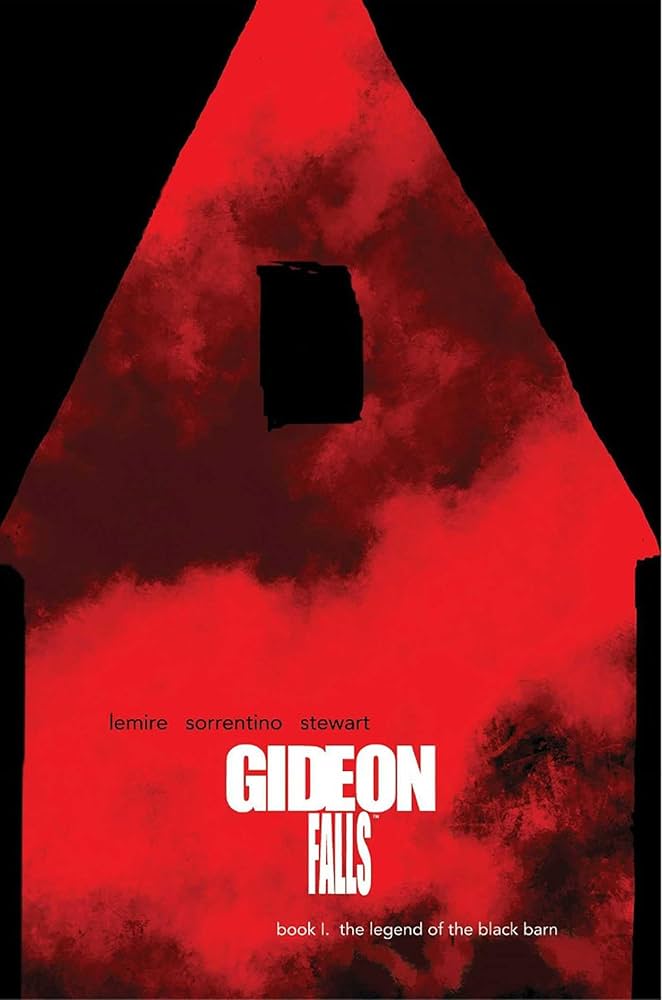
Gideon Falls Deluxe Edition Volume One, by Jeff Lemire e Andrea Sorrentino (Image Comics)
Good horror comics are hard to find, and Gideon Falls is certainly one of the best. In a small town, a newly arrived priest becomes involved in the mystery of a strange black barn that appears and disappears, taking with it anyone who stumbles upon it, never to be seen again. At the same time, in a big city, a young man with apparent psychiatric issues searches for nails and wood splinters that, it soon becomes clear, are from the same barn. Soon, the two stories (and others) merge into one, with horrors piling up. It’s a great, surprising, and unsettling plot, enhanced by Sorrentino’s stunning art, which innovates in narrative and layout. The quality dips a bit in the second volume, which concludes the series, but it’s still quite a journey for fans of the genre.
2nd
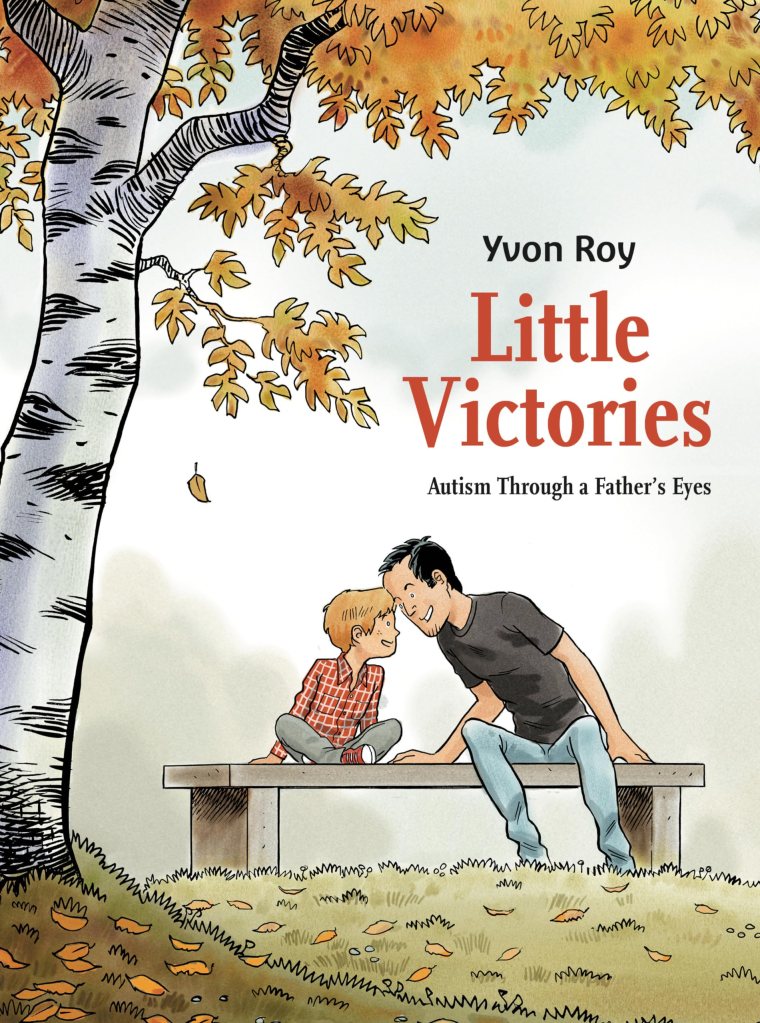
Little Victories, by Yvon Roy (Titan Books)
If you think comics are only for superheroes or action stories, this comic definitely isn’t for you. Based on the author’s experiences, it’s the story of his relationship with his autistic son, Oliver, and how he starts using his own strategies to improve the boy’s connection with the world around him instead of following the recommendations that doctors and specialists in Canada have been advocating for decades. It’s a human and emotional comic that never forgets that humour is part of life, even in situations that might seem purely dramatic. A small gem that deserves to be better known around the world.

1º
Terry e os Piratas Volume Um (1934-1936): Dragon Lady, a Rainha dos Piratas, by Milton Caniff (JBraga Comunicação)
Here, I ask the reader’s forgiveness for a small breach of ethics, as I was the one who helped the publisher negotiate and license this work and also translated it into Portuguese. But Terry and the Pirates is truly incredible, irrefutable proof that the comic strips published in newspapers in the early 20th century were far superior in their plots to the comic books of the same period. Batman and Superman from the 1930s and 1940s? Good enough, but they don’t come close to the quality of strips like The Phantom, Buzz Sawyer, and The Spirit (which wasn’t a strip but was still a newspaper product). By far, the best pure adventure strip of that era was Terry. The adventures of three friends in China, dealing with criminals, spies, warlords, and femme fatales, remain as vibrant today as they were back then. Readers are constantly excited to turn the page and see what happens next. Lots of action and excitment, never forgetting the humour. Recommended for fans of Tintin, Indiana Jones, Jonny Quest… and any comic book fan with good taste, really. Nothing better was released in Brazil in 2024, and it’s easy to see why it’s such a legendary comic. Oh… and the translation is very good too!!!
And for you, what were your favorite comics read in 2024?
/////////////////////////////////////////////////////////////////////////////////////////////
OS 10 MELHORES QUADRINHOS DE 2O24
Os 10 melhores gibis do ano passado! Quem ficou em primeiro lugar?
Para um fã e profissional dos quadrinhos, ler gibis ainda é um prazer. Ler os gibis bons, ao menos, que cada vez parecem mais raros. HQs de qualidade regular têm por aí aos montes, mas as marcantes e que dá vontade de guardar pra reler um dia parecem cada vez mais raras. Abaixo, segue minha lista dos 10 melhores quadrinhos que li em 2024. Como já é tradicional em minhas listas anuaus, você vai encontrar gibis que foram lançados no Brasil, nos EUA e na Europa no ano passado, mas também algumas inéditas aqui e lá e outras que foram lançadas há mais tempo. Como a função dessas listas são, no fundo, indicar leituras, não me prendo a datas de publicação, mas sobre o que melhor li entre mais de 100 álbuns.
Assim, em contagem regressiva:
10º
Grandville L’integrale, de Bryan Talbot (Jonathan Cape)
A série de sucesso de Talbot em uma coleção de luxo, repleta de extras. No início do século 20, o antropomórfico policial Inspetor LeBrock investiga mistérios e crimes numa realidade paralela em que a Inglaterra se tornou uma república socialista, após conseguir sua liberdade das forças invasoras da França. Ação, violência, bons roteiros e personagens cativantes numa série com arte incrível e que deixa o leitor em suspense constante. Só peca por Talbot tentar colocar algumas cutucadas ao capitalismo nas tramas e criticar políticos de quem não gosta nos extras, demonstrando que engole totalmente as falcatruas da mídia tradicional muncial. Não tira o prazer da leitura, mas o roteirista e desenhista inglês deveria se informar melhor antes de expressar algumas tolices em que acredita por pura falta de informação – pra não comentar que sua “república socialista” só é socialista no nome, pois tem todas as características de uma sociedade capitalista.
9º
Batman with Robin the Boy Wonder: From the 30’s Through the 70’s, de Bob Kane, Bill Finger, Neal Adams (Crown Pub)
Essa edição inglesa de 1977, em preto e branco, reúne algumas das melhores histórias de Batman lançadas entre a década de 1930 e 1970, por criadores que marcaram a trajetória do personagem. Algumas delas já são bem conhecidas dos fãs, mas há algumas pérolas pouco vistas e, principalmente no início do volume, histórias provavelmente inéditas no Brasil em que o Batman, no início de sua carreira, usa métodos verdadeiramente violentos contra criminosos. Por exemplo, ele não se furta a usar uma pistola sempre à mão para atirar em capangas, chefões do crime e cientistas loucos. Divertido e radical como os quadrinhos de super-heróis deveriam ser. (Agradececimentos a Wilson Simonetto).
8º
Tex Edição de Ouro 72, de Mauro Boselli e Carlo Rafaelle Marcello (Mythos Editora)
Tex é quase sempre um gibizão divertido, cheio de ação, tiroteios e humor – só quando os roteiristas deixam o herói e seus companheiros infalíveis demais é que as histórias perdem em qualidade, mas por sorte isso é raro. Esta edição parece quase uma aventura de super-heróis, em que os Texas Rangers enfrentam um grupo de sete psicopatas em que cada membro tem uma característica especial – um cego com mira infalível, um outro de extrema força, outro que usa facas e assim por diante. O confronto é muito bem conduzido, com diversos momentos de suspense e ação. Ao mesmo tempo um faroeste moderno e à moda antiga.
7º
Miracleman: The Silver Age, de Neil Gaiman e Mark Buckingham (Marvel Comics)
Tivemos que esperar 30 anos para que Gaiman e Buckingham completassem a trama da “Era de Prata” de Miracleman, após herdarem a série das mãos de Alan Moore. O estilo de Gaiman é diferente, então a ação e violência dão lugar a aprofundamento de personagens e à exploração do curioso mundo em que o Miracleman é visto como rei e deus. O foco principal aqui é a ressurreição do Young Miracleman, o jovem parceiro de Mike Moran morto nos anos 1950, e seus problemas para se ajustar a um mundo futuro que mal compreende. No final, é um estudo de personagem e uma trama cheia de detalhes interessantes como eram muitos dos bons quadrinhos dos anos 1980 e 1990, o tipo de gibi que as editoras parecem, em grande parte, ter perdido a fórmula de como criar. Pena que provavelmente não veremos o fim dessa saga após o cancelamento recente de Gaiman, a não ser que entreguem os roteiros para outro profissional. Todd McFarlane, talvez?
6º
Reckless, de Ed Brubaker e Sean Phillips (Image Comics)
Com Reckless, Brubaker e Phillips iniciaram um experimento na Image Comics que deu muito certo: lançar histórias de um personagem fixo, o detetive do título, no formato de graphic novels trimestrais de cerca de 144 páginas com histórias completas. Neste volume inicial, Ethan Reckless se mete em confusão ao tentar ajudar alguém de seu passado, numa trama que vai se tornando cada vez mais perigosa e sangrenta. A inspiração dos autores são os romances noir, os pulps e o cinema mais sério e reflexivo dos anos 1970. Ótima pedida para os fãs de ação e mistério e, por sorte, já foram lançados diversos outros volumes que podem ser lidos independentemente.
5º
The Amazing Spider-Man by Nick Spencer Omnibus, de Nick Spencer, Ryan Otley e Humberto Ramos (Marvel Comics)
Lembra quando o Homem-Aranha era divertido e engraçado? Quando as tramas e situações vividas por Peter Park eram dramáticas, mas havia ainda espaço para o humor? É isso que o roteirista Nick Spencer resgata em sua fase iniciada em 2018 e que rendeu recentemente este volumão de mais de 1300 páginas. O foco é o surgimento de um novo vilão que causa enormes problemas a Peter e todos à sua volta, mas as tramas nunca esquecem de surpreender ao leitor com aparições marcantes de Kraven e outros inimigos clássicos. Entre os destaques estão o vilão Bumerangue, que se torna colega de quarto de Peter e o mete em diversas confusões, e J. Jonah Jameson, que tenta a todo custo ajudar o Aranha, agora que descobriu sua identidade secreta. Junte isso à arte de Ryan Ottley e a um Humberto Ramos tentando segurar a estilização e temos um gibizão capaz de agradar novos e velhos leitores.
4º
Airboy, de James Robinson e Greg Hinkle (Image Comics)
Airboy é um herói dos quadrinhos dos anos 1940, um jovem piloto de avião que enfrentava nazistas e japoneses durante a Segunda Guerra Mundial. E esta não é exatamente uma história sobre ele… na verdade, é uma história repleta de metalinguagem em que o roteirista James Robinson (de Starman e A Era de Ouro) e o desenhista Hinkle são contratados para criar uma série do personagem para a Image Comics mas, ao se verem frente a um bloqueio criativo, caem num turbilhão de uso de drogas e orgias, até que, magicamente, trazem Airboy ao mundo real. A partir daí, a história toma rumos surpreendentes, com o choque de Airboy ao conhecer o nosso mundo e achar que lutou tanto por nada e, quando a situação se inverte, Robinson e Hinkle serem obrigados a realizar uma perigosa missão contra os nazistas ao serem transportados ao mundo de Airboy. É uma reflexão sobre o mercado de quadrinhos, sobre como certos autores são colocados contra as cordas e vistos como capazes de fazer apenas um tipo de trabalho pelos editores. É um gibi ao mesmo tempo existencial, de humor e aventura, com mais apelo a quem acompanha a carreira de Robinson, mas que pode ser apreciado por qualquer um que conheça o mercado de quadrinhos e se interesse pelo processo criativo. Uma obra fenomenal, que levou os autores ao “cancelamento” após fazerem humor com assuntos hoje “proibidos”. Mais motivo ainda pra ler.
3º
Gideon Falls Deluxe Edition Volume One, de Jeff Lemire e Andrea Sorrentino (Image Comics)
São raros os bons gibis de terror e Gideon Falls é certamente um dos melhores. Numa cidadezinha do interior, um padre recém-transferido se envolve no mistério de um estranho celeiro negro que aparece e desaparece, levando consigo incautos que nunca mais são vistos. Ao mesmo tempo, numa grande metrópole, um jovem com aparentes problema psiquiátricos procura pregos e lascas de madeira que, logo fica claro, são do mesmo celeiro. Logo as duas histórias (e outras) se confundem em uma só, na qual os horrores se acumulam. É uma trama ótima, surpreendente e incômoda valorizada pela arte impressionante de Sorrentino, que inova na narrativa e na diagramação. A qualidade cai um pouco no segundo volume, que encerra a série, mas ainda assim é uma jornanda e tanto para fãs do gênero.
2º
Little Victories, de Yvon Roy (Titan Books)
Se você acha que quadrinhos são apenas para super-heróis ou histórias de ação, este gibi definitivamente não é pra você. Baseado nas experiências do autor, é a história de seu relacionamento com o filho autista, Oliver, e como passa a seguir estratégias próprias para tentar melhorar o relacionamento do menino com o mundo ao seu redor, em vez de seguir as recomendações que médicos e especialistas do Canadá seguem e indicam há décadas. É uma HQ humana e emocionante que nunca esquece que o humor faz parte da vida mesmo em situações que, a rigor, pareceriam apenas dramáticas. Uma pequena joia que precisa ser mais conhecida ao redor do mundo.
1º
Terry e os Piratas Volume Um (1934-1936): Dragon Lady, a Rainha dos Piratas, de Milton Caniff (JBraga Comunicação)
Aqui peço perdão ao leitor para realizar uma pequena quebra da ética, já que fui eu que auxiliei a editora a negociar e licenciar a obra e ainda a traduzi para o português. Mas Terry e os Piratas é mesmo incrível, uma prova irrefutável de que as tiras de quadrinhos publicadas nos jornais no início do século 20 eram muito superiores, em suas tramas, às revistas em quadrinhos publicadas no mesmo período. Batman e Superman dos anos 30 e 40? Bons, mas nem chegam aos pés da qualidade das tiras do Fantasma, Buzz Sawyer e do Spirit (que não saía em tiras, mas também era um produto dos jornais). Mas, de longe, a melhor tira de aventura entre todas as da época era mesmo Terry. As peripécias de três amigos na China, às voltas com criminosos, espiões, senhores da guerra e mulheres fatais continuam tão vitais hoje quanto eram antes. O leitor fica empolgado todo o tempo para virar a próxima página e descobrir o que vai acontecer em seguida. Ação e emoção, sem nunca esquecer do humor. Indicado para fãs de Tintim, de Indiana Jones, de Jonny Quest… e para qualquer fã de quadrinhos de bom gosto. Não teve nada melhor lançado no Brasil em 2024 e é fácil entender porque é uma história em quadrinhos tão lendária. Ah… e a tradução é muito boa também!!!
E para você, quais foram seus quadrinhos favoritos lidos em 2024?
P.S.: E as cinco menções honrosas? Virão num artigo separado! Aguente aí!